Column · @ylhxzx874z
Prolonging Your Windows: The Complete Guide to Window Seal Repair
I have been in the window business long enough to know that most homeowners do not think about their window seals until something goes wrong. You might notice a thin layer of fog between the panes one winter morning, or a draft creeping in around the frame during a DFW summer thunderstorm. That is when window seal repair suddenly becomes the most important thing on your mind. And it should be. The seal on a modern window is not just a strip of rubber; it is a carefully engineered barrier that keeps your home comfortable, your energy bills low, and your glass clear.
What makes window seal repair different from simply caulking a gap? The answer lies in how a window is built. Most homes today use double-pane windows, also known as IGUs (Insulating Glass Units). Each IGU is two panes of glass separated by a spacer and sealed around the edges. That sealed cavity is filled with Argon gas, which insulates far better than plain air. The seal itself is a combination of a desiccant-filled spacer (to absorb any moisture that sneaks in) and a polyurethane sealant or silicone caulk on the outside. When that seal fails, the whole system breaks down.
I have seen window seal failure happen for a dozen different reasons. Sometimes it is thermal stress from a scorching Texas afternoon followed by a cold front. Other times it is UV degradation from years of direct sun hitting the frame. And sometimes it is just age. The sealants that worked perfectly when the window was installed begin to dry out, crack, or lose adhesion. Once that happens, the Argon gas leaks out, moisture creeps in, and you get that classic foggy glass look. That is when homeowners start searching for window seal repair options, and they quickly learn that not every fix is the same.
Seal Failure and What It Means for Your Home
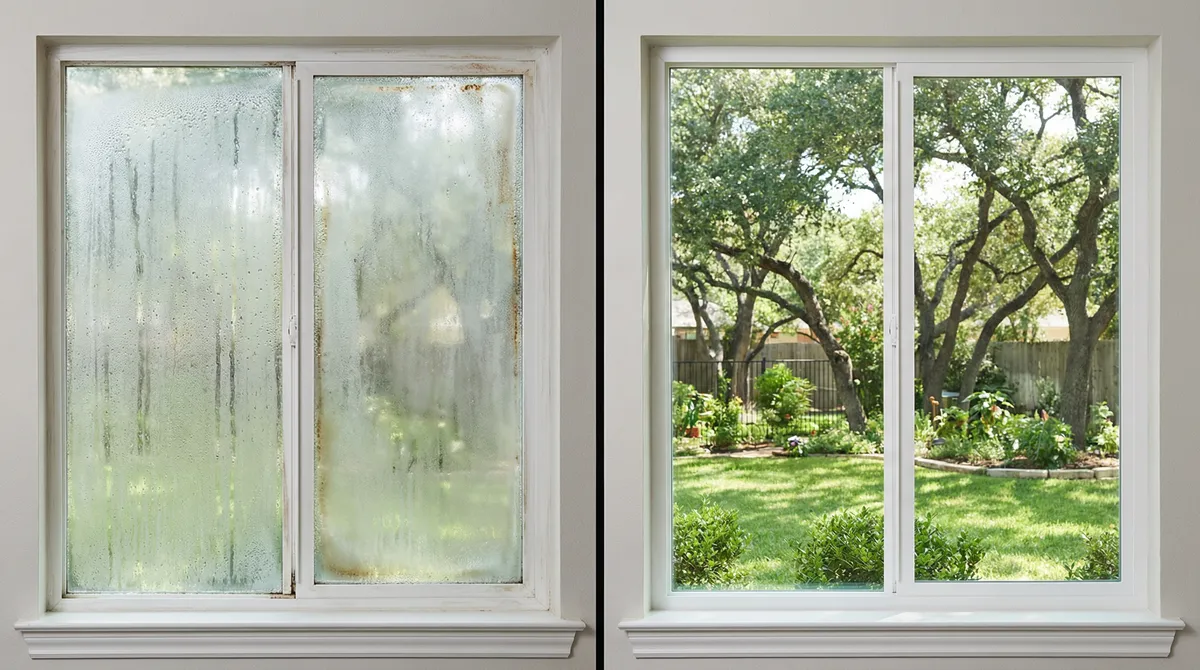
When a seal fails, the first sign is often condensation buildup between the panes. You might wipe the inside of your windows every morning and still see a stubborn haze. That haze is water vapor trapped inside the IGU, and it usually means the desiccant inside the spacer is saturated. The desiccant is there to catch small amounts of moisture that get through the seal over time, but once the seal breaks wide open, the desiccant cannot keep up. The result is a window that looks permanently dirty, even after a thorough cleaning.

Beyond the cosmetic problem, a failed seal hurts your home's energy efficiency. Double-pane windows rely on that sealed gas layer to slow down heat transfer. When the seal breaks, the gas escapes and the window becomes little more than a single pane with an air gap. In the DFW climate, that means your air conditioner runs harder in July and your heater works overtime in January. I have measured the temperature difference across a failed IGU with a thermal camera, and it can be a full ten degrees colder on the interior surface compared to a properly sealed window. That is cold glass, and cold glass means drafts and higher bills.
Repair vs. Replacement: The Practical Choice
A lot of people assume that a failed seal means a new window. That is one option, and sometimes it is the right one. But window seal repair is a real alternative, especially if the glass itself is still in good shape and the frame is solid. I have repaired IGUs where only the seal had failed, and the customer saved a significant amount compared to buying a whole new window. The trick is knowing when repair makes sense and when you are better off with a full glass replacement.
If the window is under warranty, check that first. Many manufacturers offer a warranty on the seal itself, and a reputable installer will handle the claim. If the warranty has expired, or if the window is from a brand that no longer supports that model, you have two options. The first is to have a professional remove the IGU, clean the spacer, apply a new polyurethane sealant or high-performance sealant, and reassemble the unit. This works well for windows that are still structurally sound. The second option is to replace the entire IGU with a new sealed unit, which is what most commercial glass services recommend for larger windows or for windows with damaged glass.
I once worked on a house in Plano where every single window had seal failure. The homeowner had called three different companies, and two of them said replacement was the only way. The third company, the one I was consulting with, took a different approach. We tested each IGU individually and found that about half of them could be repaired in place. The other half needed new glass. By doing a mix of window seal repair and targeted glass replacement, the homeowner got a fully functional set of windows for about sixty percent of the cost of a full replacement. That is the kind of practical solution that comes from experience, not from a sales script.
Materials and Methods That Last
Not all sealants are created equal. I have seen homeowners try to fix a leaking window with a tube of ordinary silicone caulk from Lowe's, and it never ends well. Silicone caulk is fine for sealing the frame to the wall, but it does not bond well to the spacer or the glass edge inside an IGU. For a proper window seal repair, you need a high-performance sealant specifically designed for IGU fabrication. Polyurethane sealants are the standard because they offer strong adhesion and good resistance to UV degradation. Some professionals use dual-seal systems with a primary seal of polyisobutylene and a secondary seal of silicone or polyurethane. That combination gives you both flexibility and durability.
The desiccant inside the spacer also matters. If you are repairing a window, you should replace the desiccant or at least the spacer assembly. Old desiccant that is already saturated will not absorb new moisture, and the repair will fail quickly. A good repair shop will open the IGU, clean out the old desiccant, install fresh material, and reseal the unit. That is a job for someone with the right equipment and training. It is not a weekend DIY project, even though you might see tutorials on HomeAdvisor or YouTube that suggest otherwise.
When Professional Installation Is Worth It
I have met plenty of handy homeowners who can replace a faucet or patch drywall without breaking a sweat. But window seal repair is one of those tasks where professional installation often pays for itself. The reason is that a seal failure is rarely just one problem. When you look at a foggy window, you are seeing the end result of thermal stress, UV degradation, and possibly a manufacturing defect. A professional can diagnose the root cause and decide whether repair, glass replacement, or a full window replacement is the right call.
Another factor is the warranty. Most reputable window companies back their work with a warranty on both the material and the labor. If you attempt a repair yourself and it fails in six months, you are back at square one with no recourse. If a professional does the job and offers a warranty, you have peace of mind. In the DFW area, where temperature swings can be extreme, a warranty is especially valuable. The seal that holds up through a mild spring might fail during a hard freeze or a heat wave. A pro will use materials rated for that range of conditions.
Prevention and Long-Term Care
Can you prevent window seal failure? Not entirely, but you can slow it down. The biggest factor is controlling how much direct sun hits the window frames. If you have windows on the south or west side of the house, consider adding exterior shading or a UV-blocking film. That reduces the thermal stress on the sealant and slows UV degradation. Also, keep an eye on the caulking around the exterior of the frame. If that caulk cracks, water can get behind the frame and accelerate seal failure from the outside. A simple bead of high-performance sealant around the frame every few years can add years to the life of your windows.
Cleaning the windows with non-abrasive cleaners also helps. Harsh chemicals can attack the sealant at the edge of the glass. Stick to mild soap and water, and avoid pressure washers near the window edges. If you notice condensation buildup on the inside of the glass, wipe it dry quickly. Standing moisture can seep into the seal over time, especially if the seal is already compromised. These small habits do not replace proper window seal repair, but they do reduce the frequency with which you need it.
I remember a customer in Fort Worth who had a set of double-pane windows that were twenty years old and still perfectly clear. When I asked how he maintained them, he said he just kept the exterior caulk fresh and never let the windows get wet for long periods. That is not a complicated strategy, but it works. Most seal failures I see are in windows that were neglected for years, with cracked caulk and no attention to the frame condition. A little preventive care goes a long way.
The Bottom Line on Window Seal Repair
If you are dealing with foggy glass, drafts, or rising energy bills, window seal repair is often the most cost-effective solution. It addresses the root cause without forcing you to replace an entire window system that is otherwise functional. The key is to work with someone who understands IGUs, has access to the right materials like polyurethane sealant and fresh desiccant, and can back the work with a warranty. Avoid shortcuts like smearing silicone caulk over the edge of the glass. That might hide the fog for a few weeks, but it will not restore the Argon gas or fix the structural seal.

When you are ready to move forward, look for a company that specializes in foggy glass repair and has a track record in your area. In DFW, that means finding a team that deals with the local climate and knows how thermal stress affects different window brands. Ask about their process. Do they replace the desiccant? Do they use a dual-seal system? Do they offer a warranty on the repair? Those are the questions that separate a lasting fix from a temporary patch.
A properly repaired window should look clear, seal tight, and perform like new. It should not show condensation buildup or feel cold to the touch in winter. If it does, the repair was not done right. Trust your senses. You live with those windows every day, and you will know when the problem is solved. Window seal repair is not a mystery. It is a straightforward process that requires the right materials, the right technique, and a bit of patience. When done well, it can double the life of your windows and save you hundreds of dollars in energy costs over the years.